Business Operations
Virtual Office in Germany: Is It Legal & Accepted?
Is a German virtual office legal? It can be your Handelsregister seat if serviceable, is risky for the Impressum, and works for VAT. Costs €20-€250/month.
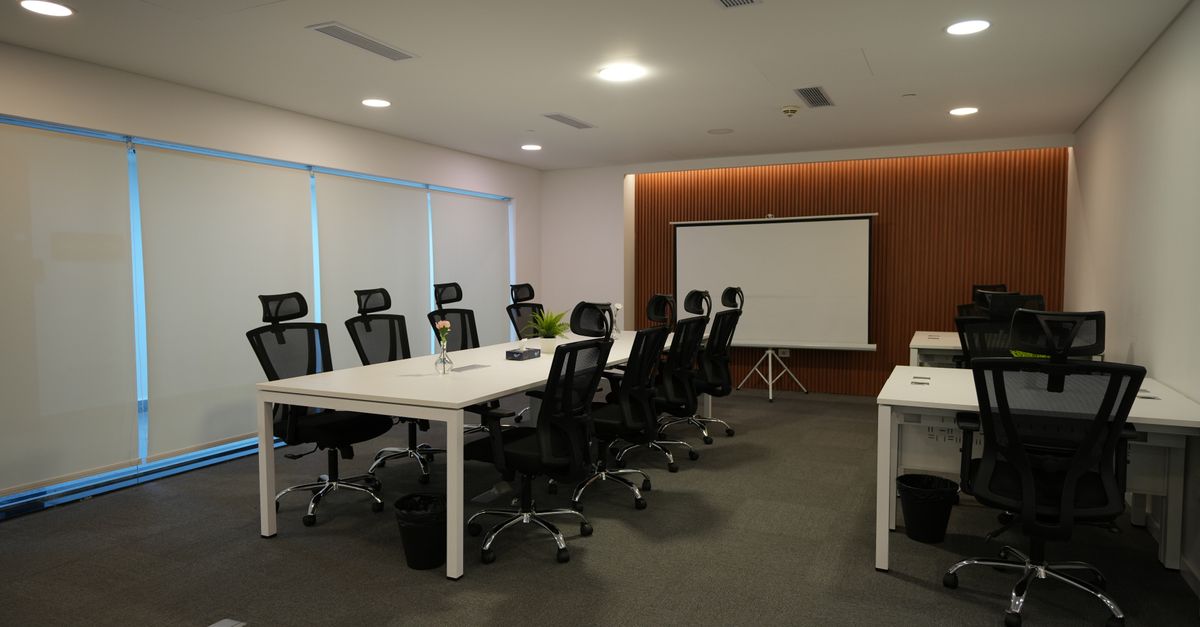
A virtual office in Germany is legal, but it is not "accepted by all authorities" in one sweep. The same address is tested by three different legal regimes, and they give three different answers: it can serve as your Handelsregister seat if it is genuinely serviceable, it is the riskiest choice for your website Impressum, and it works for VAT invoices on reachability alone. This page sets out each test honestly, with its statute or case, all accessed 10 June 2026.
What a virtual office in Germany includes
A virtual office is a package built around a credible German business address rather than a leased space (Alliance Virtual Offices; firma.de, accessed 10 June 2026). Typically it includes:
- A prestigious business address you can use on company documents.
- Mail handling: reception, scanning and forwarding worldwide.
- Often a dedicated phone number or live receptionist.
- On-demand meeting rooms or day offices when you need to be on-site.
- Add-on company-admin, tax and legal support.
What it does not automatically give you is legal sufficiency for every purpose. That depends on the test you are putting it to, which is where the three regimes come in.
One address, three legal tests
| Use | Legal test | Can a virtual office qualify? | |
|---|---|---|---|
| Handelsregister registered seat | §8 Abs. 4 GmbHG / MoMiG: must permit actual service, incl. substitute service | Yes, if genuinely serviceable; a pure letterbox can be rejected | |
| Impressum (website notice) | §5 DDG: ladungsfähige Anschrift where you can be met | Contested / often No (BGH V ZR 210/22, 07.07.2023); co-working safer | |
| VAT invoice (Vorsteuerabzug) | Reachability only | Yes; BFH (2018) allows a letterbox address if reachable |

Is a virtual office legal in Germany? One address, three legal tests
A virtual office is legal. The catch is that the same physical address must independently pass three separate legal tests, and those tests have different answers. A vendor promising that one address is "fully compliant and accepted by all authorities" is glossing over this. The three regimes are company law (your Handelsregister seat), consumer and web law (your Impressum), and tax law (the address on a VAT invoice). Read each separately before you rely on a virtual office for any one of them.
Matrix: Handelsregister seat vs Impressum vs VAT
| Use | Legal test | Can a virtual office qualify? |
|---|---|---|
| Handelsregister registered seat | §8 Abs. 4 GmbHG / MoMiG: must permit actual service of documents, including substitute service | Yes, if genuinely serviceable; a pure letterbox where service is only "pretended" can be rejected |
| Impressum (website legal notice) | §5 DDG: a ladungsfähige Anschrift where you can actually be met | Contested / often No (BGH V ZR 210/22, 07.07.2023); a co-working space is safer |
| VAT invoice (Vorsteuerabzug) | Reachability only | Yes; BFH (2018) allows a letterbox address if the trader is reachable there |
Can a virtual office be your registered seat (Handelsregister)?
For a GmbH or UG, the registered address (inländische Geschäftsanschrift) is governed by §8 Abs. 4 GmbHG, a requirement introduced by the MoMiG reform to combat misuse and protect creditors (bclplaw.com; gesetze-im-internet.de/gmbhg/__8.html, accessed 10 June 2026). The rules are specific:
- The address must lie inside Germany, not in another EU or third country.
- It must permit reliable and effective service of process, including substitute service.
- A c/o address (for example at a lawyer, tax advisor or notary) is permissible, provided it does not feign a service capability it does not have.
Courts reject addresses where service is "merely pretended" (nur vorgetäuscht). The teeth behind this are real: if delivery is not possible at the registered address, creditors can apply for public service (öffentliche Zustellung) under §185 ZPO (cf. §15a HGB), and the company must be factually reachable (§8 Abs. 4 GmbHG, §13 HGB) (Handelskammer Hamburg, accessed 10 June 2026). So a virtual office can be your registered seat, but only if it is genuinely serviceable. Sell serviceability, not a mailbox.
Can you use a virtual office in your Impressum? (the riskiest use)
This is the use to be most careful with. The DDG replaced the TMG on 14 May 2024, and §5 DDG requires that your name and address be "easily recognisable, directly accessible and continuously available" (e-recht24.de, accessed 10 June 2026). A PO box is insufficient.
Warning: A mail-only virtual office has been held insufficient for the Impressum. In BGH V ZR 210/22 (07.07.2023), the court found that a virtual office did not satisfy the requirement, because you are not on-site and cannot actually be met. Mail forwarding alone is not enough.
By contrast, a co-working space where you can be found qualifies, because there is a real presence at which you can be reached. If your business publishes an Impressum, treat the virtual office as the highest-risk application of the three and confirm your specific set-up with counsel before relying on it.
Does it work on a VAT invoice?
Yes. The BFH (2018) held that a letterbox address on an invoice suffices for input-VAT deduction (Vorsteuerabzug) as long as the trader is reachable there (BFH 13.06.2018 XI R 20/14; 21.06.2018 V R 25/15 and V R 28/16), following the ECJ decisions in C-374/16 and C-375/16 (Haufe, accessed 10 June 2026). The trader does not need to actually conduct business at that address. Of the three tests, the VAT-invoice test is the most forgiving: reachability is enough.
Virtual office vs Briefkastenfirma - and when it becomes illegal
The line between a legitimate virtual office and an illegal letterbox company turns on substance (firmenadresse.com; businesscenter-niederrhein.de; anwalt.de, accessed 10 June 2026). A Briefkastenfirma has no actual premises or personnel and no substantial economic activity at the seat. A genuine virtual office has real usable offices, staff present, documented (dated and logged) mail receipt, and verifiable activity.
The distinction has consequences. No substance at the seat risks loss of recognition, tax penalties and prosecution under the anti-money-laundering law (GwG). A letterbox is permissible only as long as the company is genuinely reachable by mail and no fraudulent intent is pursued. Note too that "Briefkastenfirma" is a colloquial label, not a defined legal term. The safe path is to treat a virtual office as a legitimate serviced presence, never a shell.
Registered seat is not your tax seat (§10 AO)
A crucial distinction that vendors rarely mention: your registered seat is not automatically your tax seat. The place of management (Ort der Geschäftsleitung) under §10 AO is the centre of top management, where the day-to-day measures of the business are actually taken (taxavis.de; dejure.org §10 AO, accessed 10 June 2026).
Acceptance of an address in your Impressum or the Handelsregister does not make it your place of management, and a virtual office does not shift the place of management to that address. Actual activity is decisive, and the competent Finanzamt follows the place of management. If your management actually happens elsewhere, that is where the tax place of management sits. Flag this for a Steuerberater.
Will banks accept a virtual address?
German banks will accept a real, serviceable business address, but they probe substance and reachability during onboarding under the anti-money-laundering rules (GwG) (firmenadresse.com; businesscenter-niederrhein.de, accessed 10 June 2026). A credible serviced virtual office with logged mail handling is far stronger than a pure letterbox. The non-negotiable is that it must be a real street address, not a PO box. The more genuine substance you can show, the smoother the account opening.
How much does a virtual office cost?
Pricing varies by city and service level (yourgermanaddress.com; alliancevirtualoffices.com; firma.de, accessed 10 June 2026):
- A basic registered business address with mail handling: typically €20-€50/month.
- Berlin: from about €65/month.
- Premium full-service in Munich or Frankfurt: up to about €250-€317/month.
- Initial setup fees: often €40-€200.
- firma.de tiers run at €149 / €199 / €249 per month (net).
Privacy - separating home from business address
A legitimate benefit of a business-address service is privacy. Your private home address need not appear in the Handelsregister, your Impressum or on your invoices if you use a business-address service (e-recht24.de; firma.de, accessed 10 June 2026). The condition, as throughout this page, is that the address you use must be genuinely serviceable. Privacy is a by-product of a real, reachable presence, not of a mailbox.
Virtual office vs Briefkastenfirma: real substance
- Real, usable offices (not a bare mailbox)
- Staff present at the location
- Documented (dated and logged) mail receipt
- Verifiable business activity
- A real street address, never a PO box
- GwG-compliant onboarding (ID/company documents)
Frequently asked questions
Choose a provider with a real staffed German location, sign up (€20-€250/month), provide ID and company documents for GwG/KYC checks, and receive a street address for mail, your Impressum and, if serviceable, the Handelsregister.
English-speaking · Düsseldorf
Ready to set up your German company?
Talk to our English-speaking team about GmbH, UG or AG formation, tax and ongoing compliance.