Business Operations
Nominee Director in Germany: The Honest Legal Reality
In Germany a nominee director is a real Geschäftsführer with full personal and criminal liability (§43, §15a InsO); the UBO is still disclosed.

Much of the English-language material on a "nominee director in Germany" sells two things that German law does not deliver: anonymity and an escape from liability. The honest reality is simpler and harder. In Germany a so-called nominee director is just a Geschäftsführer, a managing director, with full personal and, in places, criminal liability. The beneficial owner is disclosed to the Transparenzregister regardless. There is no privileged "nominee" status, no anonymity and no liability escape. A genuine local-resident managing director for real operational presence is legitimate and useful; using a "nominee" to hide the owner or dodge liability is neither legal nor effective. This page explains why.
There is no "nominee director" status in Germany, only a Geschäftsführer
When someone is appointed as a "nominee director", they are appointed as the company's Geschäftsführer and entered in the Handelsregister exactly like any other director. German law has no separate, reduced-duty "nominee" category. By statute the director must be a natural person with full legal capacity (§6 GmbHG) who must exercise "die Sorgfalt eines ordentlichen Geschäftsmannes", the diligence of a prudent businessman (§43(1) GmbHG).
The word "nominee" describes only a private intention: that the person will act on the instructions of the real owner. That understanding is an internal arrangement. It is not in the register and it changes no statutory duty. Legally, the difference between a "director" and a "nominee director" is almost none: both are Geschäftsführer with identical duties and identical liability under §43 GmbHG, §15a InsO and §266a StGB.
German courts have made this explicit. As the Federal Court of Justice put it, "Die Verantwortlichkeit des formellen Geschäftsführers entfällt nicht dadurch, dass ihm, als sog. 'Strohmann', keine bedeutsamen Kompetenzen übertragen wurden", the responsibility of the formal director is not removed by the fact that, as a so-called Strohmann (figurehead), no significant powers were transferred to him (BGH 3 StR 352/16; source: ferner-alsdorf.de, accessed 2026-06-10). In other words, signing up as a figurehead does not switch off the duties; it switches them on for you personally. For the full statutory picture of the office you would be stepping into, see our guide to the German managing director (Geschäftsführer) duties and liability.
Liabilities a "nominee" director carries in full
- Joint and several personal liability to the company for duty breaches (§43(2) GmbHG)
- Capital-maintenance liability that cannot be waived where creditors need restitution (§43(3) GmbHG)
- Duty to file for insolvency without culpable delay (§15a InsO)
- Criminal liability for late insolvency filing: up to 3 years (intentional), up to 1 year (negligent) (§15a(4)-(5) InsO)
- Liability for unpaid employees' social-security contributions (§266a StGB)
- Public-law duties attach to the office even if someone else decides (§14 StGB)
- Five-year director ban on certain convictions (§6(2) GmbHG)
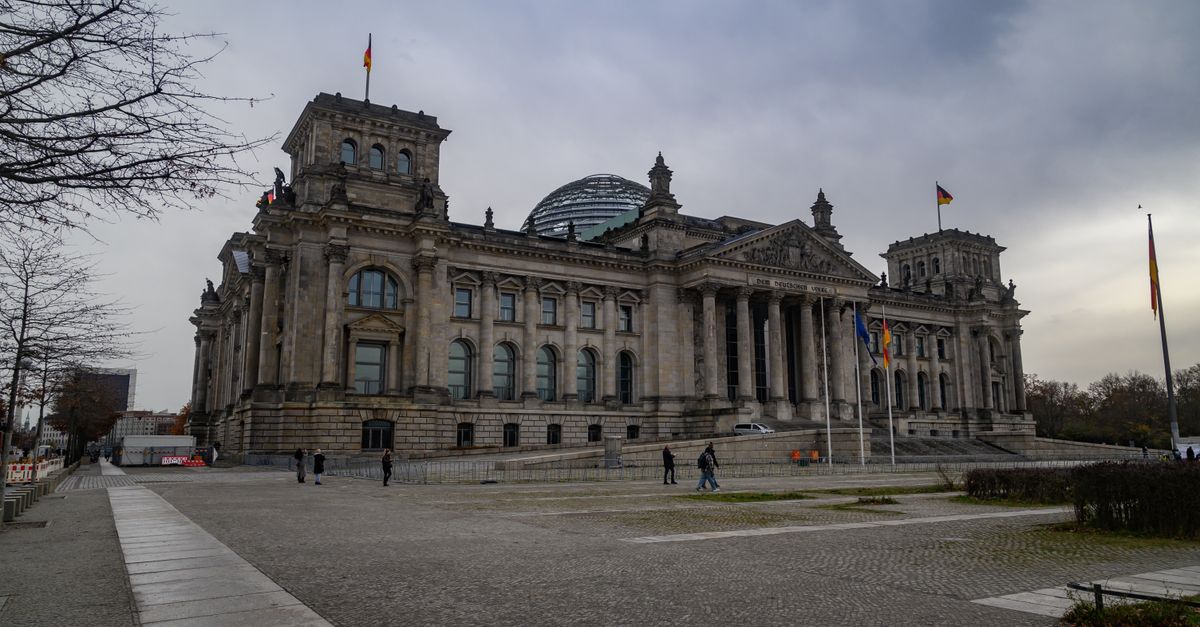
The registered director carries full personal, and criminal, liability
The liability is real and it is personal. Under §43(2) GmbHG, directors who breach their duties are "solidarisch", jointly and severally, liable to the company for the resulting damage. The capital-maintenance duty under §43(3) GmbHG (read with §30/§33 GmbHG) cannot be waived by the shareholders where the money is needed to satisfy creditors; the limitation period for these claims is five years (§43(4) GmbHG).
Liability attaches to the office, not to the power actually exercised. Section 14 StGB anchors liability to the organ position: a person who holds the post is responsible for its public-law duties even if, in practice, someone else is calling the shots. Those inescapable duties include remitting employees' social-security contributions (§266a StGB), meeting the company's tax obligations and filing for insolvency on time. A figurehead who tolerates a de-facto manager running the company is treated "wie ein Delegierender", like someone who has delegated, and remains responsible for supervision (BGH 5 StR 16/02; 5 StR 595/19; 5 StR 122/19; source: ferner-alsdorf.de, accessed 2026-06-10). The defence "I was only a nominee" does not work.
The insolvency-filing duty (the sharpest edge)
The single sharpest edge is the insolvency-filing duty under §15a InsO. A director must file for insolvency "ohne schuldhaftes Zögern", without culpable delay, and at the latest within 3 weeks of Zahlungsunfähigkeit (illiquidity) or 6 weeks of Überschuldung (over-indebtedness) (§15a(1) InsO).
Intentional failure to file (Insolvenzverschleppung) is punishable by "Freiheitsstrafe bis zu drei Jahren oder ... Geldstrafe", imprisonment of up to three years or a fine (§15a(4) InsO). Negligent failure is punishable by "Freiheitsstrafe bis zu einem Jahr oder Geldstrafe", up to one year or a fine (§15a(5) InsO). Personal civil liability to creditors runs alongside the criminal exposure.
A passive "nominee" still carries this duty in full. If the company slides into distress and no one files in time, it is the registered director, the figurehead, who is in the frame, often within weeks of the trouble starting.
Disqualification: the five-year director ban
A conviction can end a directorship for years. Under §6(2) GmbHG, persons convicted of insolvency offences (§§283 to 283d StGB), §15a-type offences, and false-statement and fraud offences (§§263 to 264a, 265b to 266a StGB) are barred from serving as a managing director for five years from the date the judgment becomes final. The bar is specific to these offences and time-limited; it is not a blanket "any criminal record" rule.
The exposure is not the figurehead's alone. Shareholders who knowingly or with gross negligence allow an ineligible person to act as managing director are themselves "solidarisch", jointly and severally, liable (§6(5) GmbHG). The arrangement spreads liability rather than containing it.
A nominee buys no anonymity: the Transparenzregister
The anonymity promise is the part that most plainly fails. Every GmbH must report its wirtschaftlich Berechtigter, its beneficial owner (UBO), to the Transparenzregister. The UBO is the natural person who holds more than 25% of the shares or more than 25% of the voting rights, or who otherwise exercises control, under §3, §19 and §20 GwG.
Critically, a nominee structure does not exempt this disclosure. A shareholder who holds the interest only as a trustee (Treuhänder) must still report the true beneficial owner behind the arrangement (source: rosepartner.de; §3/§20 GwG, accessed 2026-06-10). Nominee and Treuhand arrangements do not create a route to anonymity; they create a reporting obligation about the person they were supposed to hide.
The penalties for getting this wrong are substantial. Under §56 GwG, fines run up to €100,000 for simple violations, up to €1,000,000 for serious, repeated or systematic violations, and up to €5 million or 10% of annual turnover for aggravated cases (source: rosepartner.de, accessed 2026-06-10). Because a nominee structure does not remove the obligation, it does not remove the exposure to these fines. If your question is really about ownership and beneficial-ownership reporting, see German company shareholders and beneficial owners.
The Strohmann / faktischer Geschäftsführer trap: two liable people, not zero
Owners who try to stay in control while staying off the register often end up worse off, not better. A person who, without being formally appointed, actually runs the company can be treated as a faktischer Geschäftsführer, a de-facto managing director, and held liable, both civilly and criminally, as if they were registered (BGH 5 StR 595/19; source: ferner-alsdorf.de, accessed 2026-06-10).
Put those two rules together. The figurehead is liable because they hold the office (§14 StGB; §43 GmbHG). The hidden owner who keeps pulling the strings can be liable as a faktischer Geschäftsführer. So the figurehead does not remove the real decision-maker from liability; the structure can create two liable people where the owner imagined there would be zero.
Is a nominee arrangement legal in Germany?
It depends entirely on what it is for. Appointing a real, functioning resident managing director, a genuine person who actually performs the role, is legal and common. What is not legal is a pure Strohmann sham designed to conceal the true actor: that exposes both the figurehead and the de-facto manager, including criminally (BGH 5 StR 16/02; 5 StR 595/19; source: ferner-alsdorf.de, accessed 2026-06-10). Using a nominee specifically to evade beneficial-ownership disclosure breaches the GwG (§20 GwG).
The dividing line is substance and purpose. A resident managing director who genuinely serves the company is on the right side of it. A figurehead whose only function is to hide the owner or shield the real controller from liability is on the wrong side of it, and the arrangement does not even achieve its goal.
Does a German GmbH need a resident managing director?
Not as a matter of law. Section 6 GmbHG imposes no German citizenship or residency requirement; a non-EU resident can serve as the managing director of a GmbH (sources: CMS; DLA Piper; consultinghouse.eu, accessed 2026-06-10). The driver of "resident director" demand is practical, not statutory: German banks' KYC and AML processes, and Handelsregister practice, strongly prefer at least one German or EU-resident director who can be reached and can enter Germany when needed. That practical pressure, not a legal rule, is the legitimate reason most foreign owners look for a local director. For the full eligibility picture, including the foreigner caveats, see the German managing director (Geschäftsführer) duties and liability page.
The legitimate alternative: a genuine local managing director
Here is what we do and do not offer. We provide a genuine local-resident managing director for real operational and banking substance: a person who eases bank-account opening (KYC/AML), satisfies Handelsregister practice, can enter Germany when required and acts as a real local contact point for the company. That is a legitimate, valuable service for a foreign owner building a real German operation.
What we decline is the hide-the-owner or liability-dodging use case, because it does not work. The beneficial owner is disclosed to the Transparenzregister regardless (§20 GwG). Liability cannot be contracted away: an indemnity the owner gives the director is a private arrangement between them and does not bind the company, its creditors, the tax office or the criminal courts (§43 GmbHG; §15a InsO; §266a StGB). If you need a compliant resident director for genuine substance, that is exactly what a properly structured German managing director (Geschäftsführer) duties and liability appointment delivers; if you want anonymity or a liability shield, German law does not offer it.
If you are still at an earlier stage, our guides on how to form a German GmbH and on non-EU company formation in Germany set out the wider path.
Why a nominee buys no anonymity and no shield
Frequently asked questions
In Germany it carries no special status. The person is appointed as the company's *Geschäftsführer* and registered in the Handelsregister like any other director (§6, §43(1) GmbHG). "Nominee" describes only the private intention to act on the owner's instructions; it changes no statutory duty.
English-speaking · Düsseldorf
Ready to set up your German company?
Talk to our English-speaking team about GmbH, UG or AG formation, tax and ongoing compliance.