Business Operations
Branch Office in Germany: Types, Registration, Liability & Tax
A branch office in Germany has no share capital but full parent liability. Autonomous vs dependent branch, Handelsregister, notary, tax (~30–33%) explained.
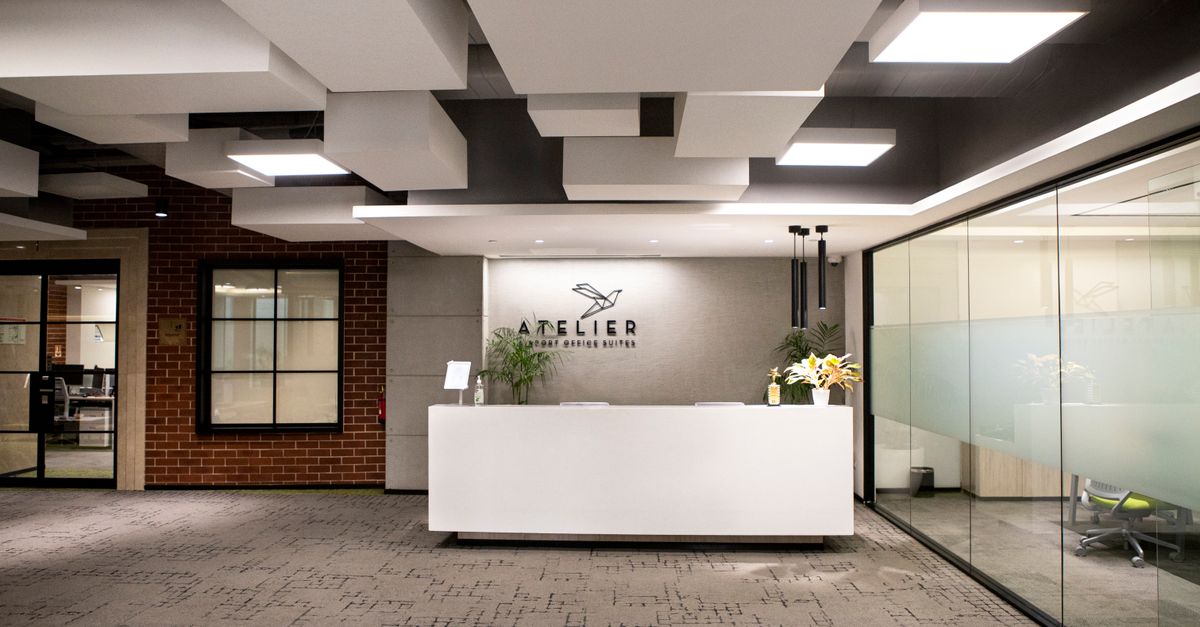
In German law, "branch office" hides three legally distinct things, and getting them confused is expensive. A branch has no share capital, but the foreign parent remains fully liable. This page sets out the German branch rules accurately, grounded in the HGB (§13d–§13g), and is current as of 10 June 2026.
What "branch office" really means in German law
The English word "branch" collapses three different German structures, and most English-language pages blur them. The first is the autonomous branch (selbständige Zweigniederlassung): not a separate legal entity, but entered in the Handelsregister. The second is the dependent branch (unselbständige Zweigniederlassung, often also called a Betriebsstätte): also not a separate entity, and not entered in the register, requiring only a trade-office registration. The third is the subsidiary (Tochtergesellschaft, typically a GmbH): a separate legal person with its own share capital and limited liability. The single fact most competitors get wrong is which of these sits in the commercial register: only the autonomous branch does. Everything else in this guide follows from that distinction.
Comparison table, autonomous branch vs dependent branch vs subsidiary
| Structure (German term) | Legal entity? | Handelsregister entry | Share capital | Liability |
|---|---|---|---|---|
| Autonomous branch, selbständige Zweigniederlassung | No (part of parent) | Yes (HGB §13d–§13e) | None | Parent fully liable |
| Dependent branch, unselbständige Zweigniederlassung / Betriebsstätte | No (part of parent) | No (trade-office registration only) | None | Parent fully liable |
| Subsidiary, Tochtergesellschaft (e.g. GmbH) | Yes (separate legal person) | Yes | €25,000 (GmbH) | Limited to the GmbH; parent shielded |
Sources: HGB §13d–§13e (gesetze-im-internet.de); IHK Bonn; Handelskammer Hamburg (accessed 2026-06-10).
Branch vs subsidiary in Germany
| Feature | Branch (Zweigniederlassung) | Subsidiary (GmbH) | |
|---|---|---|---|
| Separate legal entity? | No (part of parent) | Yes (separate legal person) | |
| Share capital | None | €25,000 (GmbH) | |
| Liability | Foreign parent fully liable | Limited to the GmbH; parent shielded | |
| Handelsregister | Autonomous branch only | Yes | |
| Tax | ~30% (Berlin) to ~33% (Munich) on PE profit | ~30% (Berlin) to ~33% (Munich) |

Autonomous branch (selbständige Zweigniederlassung)
An autonomous branch is physically and structurally separate from the head office. It has its own management, its own accounting and balance sheet, its own working capital and its own bank account, and it can conduct business with a degree of independence. Crucially, it is entered in the commercial register at the court of the branch's district under HGB §13d–§13e. Because it is a fixed, independent business facility, an autonomous branch is generally regarded as a permanent establishment for tax purposes (IHK Bonn; NRW.Global Business, accessed 2026-06-10). It is still not a separate legal entity: it is part of the foreign parent, which remains liable for its obligations.
Dependent branch (unselbständige Zweigniederlassung / Betriebsstätte)
A dependent branch is controlled from the head office. It has no real commercial discretion of its own, it invoices in the parent's name, and it does not maintain the independent management and accounts that characterise an autonomous branch. Because it lacks that independence, it is not entered in the Handelsregister: a trade-office registration (Gewerbeanmeldung) is sufficient (IHK Bonn; Handelskammer Hamburg, accessed 2026-06-10). Many English-language guides state this the wrong way round, so be precise: the dependent branch is the one that stays out of the register, and the autonomous branch is the one that goes in.
Liability, who pays the branch's debts
Here is the honest core of the decision. A branch, of either type, is not a liability shield. The foreign parent is fully and without limit liable for the branch's debts. As IHK Bonn puts it, the debtor is always the natural or juristic person that is the company headquarters (accessed 2026-06-10). A creditor of the German branch can pursue the parent's assets wherever they are.
This is why "a branch is cheaper" must never be read as "a branch is safer." If limiting liability is your goal, the correct structure is a GmbH subsidiary, a separate legal person whose liability is, in principle, confined to the company itself (§6 GmbHG framing). See set up a German subsidiary (GmbH) for that route.
Does a branch need share capital?
No. A branch has no minimum share-capital requirement, because it is not a separate legal entity (lawyersgermany.com, accessed 2026-06-10). That contrasts directly with a GmbH subsidiary, which must have its own share capital of €25,000. But do not read "no capital" as "no substance and no tax." A branch still triggers German corporate and trade tax on the profit attributable to it, VAT obligations where it makes taxable supplies, proper bookkeeping, and a trade-office registration. The capital requirement disappears; the compliance does not.
How to set up a branch office in Germany (step by step)
Setting up an autonomous branch follows a defined path. The key steps are:
- Resolve to establish and notify for registration. The parent's Vorstand (for an AG) or Geschäftsführer (for a GmbH) notifies the establishment of the branch for entry in the Handelsregister at the court of the branch's district (HGB §13d). The application must be certified and submitted by a notary.
- Verify the parent and file its articles. The parent's existence must be evidenced, and its articles of association are filed in a German certified translation.
- Provide the prescribed registration content. Under HGB §13e, the registration must contain the domestic business address, the branch's purpose, the foreign register and registration number, the parent's legal form, and the permanent representatives together with their powers.
- File the Gewerbeanmeldung. The branch is registered with the local trade office.
- Register for tax. The branch registers with the Finanzamt and, where it makes taxable supplies, for VAT.
Note that HGB §13g extends the disclosure obligations of §10 GmbHG to branches of foreign GmbH-type companies. A dependent branch is far simpler: it needs only a Gewerbeanmeldung, with no notary and no Handelsregister entry.
Documents needed for an autonomous branch
For the notarised Handelsregister application of an autonomous branch, you will typically need:
- A commercial-register extract proving the parent's existence.
- The parent's articles of association in a German certified translation.
- The foreign register and registration number.
- The parent's legal form.
- The domestic (German) business address.
- The permanent representatives and the scope of their powers.
The application must be notarised (HGB §13e; consultinghouse.eu, accessed 2026-06-10). A reliable registered address service can supply the mandatory domestic business address required under §13d/§13e, and you will also need to appoint a German managing director or permanent representative.
How a German branch is taxed
An autonomous branch is generally regarded as a permanent establishment (Betriebsstätte). Germany taxes only the profit attributable to the German permanent establishment, not the parent's worldwide income. On that attributable profit, the charges are:
- Corporation tax of 15% plus the 5.5% solidarity surcharge, giving 15.825%.
- Trade tax (Gewerbesteuer), calculated as a base rate of 3.5% multiplied by the municipal multiplier (Hebesatz), which works out to roughly 8.75% to 20.3% depending on the municipality.
Combined, this gives an effective burden of approximately 30% in a low-rate city such as Berlin to around 33% in a high-rate city such as Munich (PwC Tax Summaries; NRW.Global Business, accessed 2026-06-10). Note the planned trajectory: corporation tax is scheduled to fall to 14% in 2028 and to 10% from 2032 onward, while the solidarity surcharge continues.
The permanent-establishment concept itself comes from §12 AO: a PE is any fixed business facility serving the corporate purpose (the statute lists a place of management, a branch, an office, a warehouse, a workshop), and a permanent representative who habitually deals on the principal's behalf can also create one. Germany follows the OECD model and the Authorised OECD Approach (AOA) for attributing profit. An autonomous branch generally qualifies as a PE; a dependent branch does so only under certain conditions (§12 AO; PwC; NRW.Global Business, accessed 2026-06-10).
Does a branch need a VAT number?
If the branch makes taxable supplies in Germany, it registers for VAT (Umsatzsteuer). The standard rate is 19% and the reduced rate is 7%. As one current point of detail, restaurant and catering food is set to be taxed permanently at the reduced 7% rate from 1 January 2026, while beverages remain at 19% (VATupdate 2026, accessed 2026-06-10; this 2026 restaurant-rate point should be re-checked against bundesfinanzministerium.de before you rely on it).
Branch vs subsidiary, which should you choose?
The decision turns mainly on liability. A branch needs no share capital and offers a faster, cheaper market entry, but the foreign parent is fully exposed to its debts. A GmbH subsidiary needs €25,000 of share capital and a little more set-up, but it is a separate legal person, so liability is, in principle, limited to the subsidiary and the parent is shielded. If liability protection matters to you, the subsidiary is the structure to choose.
Name rules differ too: a dependent branch may not trade under any name other than that of the head office, while an autonomous branch uses the parent's name with a German location or suffix indication (IHK Bonn; Handelskammer Hamburg, accessed 2026-06-10). If limited liability is your priority, read our guide to set up a German subsidiary (GmbH), and for a focused side-by-side comparison see branch vs subsidiary in Germany.
Autonomous vs dependent branch
| Feature | Autonomous (selbständige) | Dependent (unselbständige / Betriebsstätte) | |
|---|---|---|---|
| Handelsregister entry | Yes (HGB §13d–§13e) | No (trade-office registration only) | |
| Notary required | Yes | No | |
| Permanent establishment | Generally yes | Only under §12 AO conditions | |
| Liability | Parent fully liable | Parent fully liable |
Frequently asked questions
For an autonomous branch: file a notary-certified Handelsregister application at the branch's district court, prove the parent's existence and file its articles in German certified translation, name the permanent representative(s) and the domestic address, then complete the Gewerbeanmeldung and register with the Finanzamt and for VAT (HGB §13d/§13e; IHK Bonn; consultinghouse.eu). A dependent branch needs only a Gewerbeanmeldung.
English-speaking · Düsseldorf
Ready to set up your German company?
Talk to our English-speaking team about GmbH, UG or AG formation, tax and ongoing compliance.