Is a Virtual Office Legal in Germany?
Virtual offices are legal in Germany, if the address is a genuine ladungsfähige Anschrift. The line between a serviced office and an illegal sham letterbox.
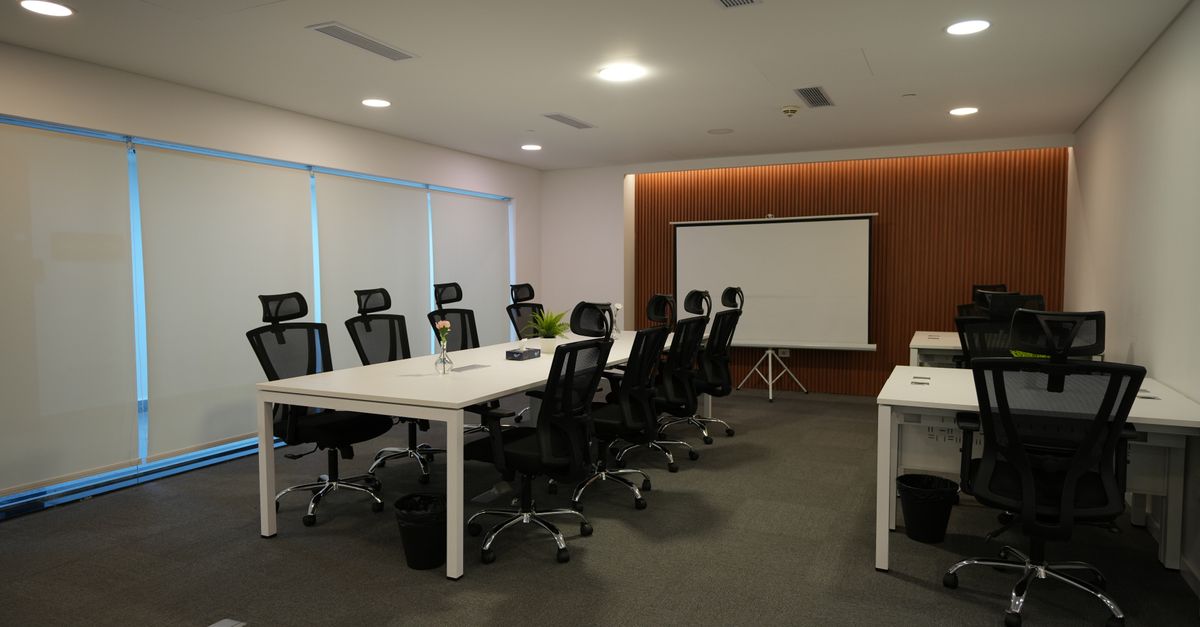
You have seen the virtual-office offers and you want a straight answer: is using one actually legal in Germany? Yes, but conditionally and use-dependently. Legality turns on the quality of the address, not on the "virtual office" label. A genuine, serviceable address where your company can be reached and where documents can actually be served is fine; a bare letterbox where service is merely pretended is not. And the same address can pass one legal test and fail another, so the use matters too. This guide names the law and draws the line honestly. It is an explainer, not individual legal advice, and gmbh-germany.com is not a law firm.
The short answer: yes, but conditionally
Virtual offices are legal in Germany. No statute prohibits using a serviced business-address provider as your registered address. The law does not regulate the label "virtual office" at all; it regulates the quality of the address, which must be a real, domestic, summons-capable address.
The word "Briefkastenfirma" (letterbox company) is colloquial, not a legal term. A letterbox address is permissible only while the company is genuinely reachable there and no fraudulent intent is being pursued. The moment the address becomes a pure pretence, the protections fall away.
So the question is never "is a virtual office legal?" in the abstract. It is "is this address a genuine, serviceable one, and am I using it for a purpose it satisfies?" [firmenadresse.com; §8 GmbHG, accessed 2026-06-10]
What a legal serviced virtual office must have
- Real, usable office premises at the address
- Staff present during business hours
- Documented mail receipt (dated and logged), with forwarding
- Verifiable reachability, so the company can genuinely be contacted there
- A genuine ladungsfähige Anschrift permitting effective service, incl. substitute service (§8 Abs.4 / §35 Abs.2 GmbHG)

The condition: a ladungsfähige Anschrift (§8 Abs.4 / §35 Abs.2 GmbHG)
Every GmbH and UG must file an inländische Geschäftsanschrift (a domestic street address) for the Handelsregister under §8 Abs.4 Nr.1 GmbHG, a requirement introduced by the MoMiG reform. Why does this address have to be real? Because §35 Abs.2 GmbHG provides that documents and declarations "können unter der im Handelsregister eingetragenen Geschäftsanschrift … zugestellt werden" (they can be served at the registered business address).
That makes the address a ladungsfähige Anschrift: an address that permits reliable and effective service of documents, including substitute service (Ersatzzustellung). A virtual office whose staff actually receive, log and forward mail can satisfy this test. A pure letterbox, where service is "merely pretended" (nur vorgetäuscht), can be rejected by the Registergericht (the register court). The test is serviceability, full stop. [§8/§35 GmbHG; bclplaw.com; juraforum.de, accessed 2026-06-10]
Serviced office vs sham letterbox: the line that matters
The same provider can be on either side of the law depending on substance. The honest framing is this: you should be buying serviceability, never a mailbox.
What a legal serviced virtual office looks like
A compliant serviced virtual office has:
- Real, usable office premises at the address
- Staff present during business hours
- Documented mail receipt (dated and logged), with forwarding
- Verifiable reachability, so the company can genuinely be contacted there
With those features, the address is a genuine ladungsfähige Anschrift, and it is legal and widely accepted as a registered seat. [firmenadresse.com; businesscenter-niederrhein.de, accessed 2026-06-10]
What makes it an illegal Briefkastenfirma
The risk side is the mirror image:
- No actual premises at the seat
- No personnel
- No substantial economic activity there
An address with none of that risks loss of recognition and tax penalties. And where such a shell is used for tax evasion, money laundering or concealment, it crosses into criminal liability under the Geldwäschegesetz (GwG), the Money Laundering Act. A letterbox is not a crime by itself, but a letterbox put to those uses is. [anwalt.de; businesscenter-niederrhein.de, accessed 2026-06-10]
One address, four legal tests, four answers
The mistake to avoid is collapsing every use of your address into a single "100% legal" answer. The same address faces four different legal tests, and a virtual office passes some and fails others:
| Use of the address | Legal test | Does a virtual office qualify? |
|---|---|---|
| Handelsregister registered seat | §8 Abs.4 / §35 Abs.2 GmbHG (actual service, incl. substitute) | Yes, if genuinely serviceable (a pure letterbox can be rejected) |
| Impressum (website legal notice) | §5 DDG (an address where you can be met) | Contested / often No (mail-only held insufficient, BGH V ZR 210/22, 07.07.2023) |
| Tax place of management | §10 AO (where management actually happens) | No (a virtual office does not shift it) |
| VAT invoice (Vorsteuerabzug) | reachability only | Yes (a letterbox address is allowed if the trader is reachable, BFH 2018) |
[§8/§35 GmbHG; e-recht24.de; §10 AO; haufe.de, accessed 2026-06-10]
Impressum: the riskiest use (§5 DDG)
The website legal notice is where a virtual office most often fails. §5 DDG (the Digitale-Dienste-Gesetz, the 14 May 2024 successor to §5 TMG, with substantially identical duties) requires a ladungsfähige Anschrift that is "easily recognisable, directly accessible and continuously available," where you can actually be met and served.
The practical points:
- A PO box is insufficient for the Impressum.
- A mail-only virtual office was held insufficient by the Bundesgerichtshof (BGH V ZR 210/22, 07.07.2023).
- A co-working space where you can actually be found is safer, because there is a real place where you are present.
Because this is the highest-failure use and case-sensitive, confirm your specific setup with counsel before relying on a virtual address in your Impressum. [e-recht24.de, accessed 2026-06-10]
Registered seat ≠ tax place of management (§10 AO)
A common and expensive misconception is that a German registered address moves your company's tax residence. It does not. The Satzungssitz / Handelsregister address and the tax place of management (Ort der Geschäftsleitung, §10 AO) are different concepts.
The place of management is wherever the company's day-to-day management actually happens. Acceptance of an address in the register or the Impressum does not make that address the place of management, and a virtual office does not move it. The place of management drives which Finanzamt is competent, and a director operating from abroad raises a separate tax and permanent-establishment analysis. That is a question for a Steuerberater, not something a virtual office solves. [taxavis.de; §10 AO, accessed 2026-06-10]
Can I use it on VAT invoices? (BFH 2018)
This is the one clear "yes." A letterbox address on an invoice suffices for input-VAT deduction (Vorsteuerabzug) if the trader is reachable at that address (BFH 21.06.2018 V R 25/15, V R 28/16; 13.06.2018 XI R 20/14), following the ECJ in C-374/16 and C-375/16. The trader does not need to conduct business at the address; reachability is enough. So for invoicing purposes a serviceable virtual address is on safe ground. [haufe.de, accessed 2026-06-10]
Will banks accept a virtual address?
German banks accept a real, serviceable business address. During onboarding, banks run KYC/AML checks under the GwG, and many scrutinise genuine substance and reachability. In that context a credible serviced virtual office with logged mail handling is far stronger than a bare letterbox. A PO box does not qualify. The takeaway is the same as everywhere else: the bank is testing whether you can actually be reached there, so serviceability is what gets you through. [firmenadresse.com; businesscenter-niederrhein.de, accessed 2026-06-10]
What happens if your address is a sham (public service → Amtslöschung)
Here is the honest downside. If your company cannot be reached at its registered address, the courts do not simply give up. Documents may be served by public service (öffentliche Zustellung) under the ZPO rules, via §15a HGB, and that service is deemed effective even though you never saw it. The result is missed court deadlines and missed tax notices, against you, with no notice you would actually register.
Worse, persistent unreachability with no known assets can end in administrative deletion (Amtslöschung) from the register, which is permanent and published. A sham address is not a clever shortcut; it is a slow route to losing control of the company entirely. [§15a HGB; commenda.io, accessed 2026-06-10]
How to stay on the legal side
The rule that keeps you safe is simple: use a serviced, reachable address with logged mail handling, and match the address to the use.
- For the registered seat, pick a compliance-grade registered address service in Germany that explicitly supports a serviceable §8 Abs.4 GmbHG seat.
- For the Impressum, make sure there is a place where you can actually be met.
- For tax residence and PE, defer to a Steuerberater; the address alone does not answer it.
If you are weighing what a service includes and what it costs, start with our German virtual office overview. And if you have not yet incorporated, see company formation in Germany and do you need a German address to form a company. gmbh-germany.com is not a law firm; we use partner and counsel framing for any advisory step.
Author: Anna Müller, Legal Consultant, gmbh-germany.com.
One address, different legal tests
| Use of the address | Does a virtual office qualify? | |
|---|---|---|
| Handelsregister registered seat (§8 Abs.4 / §35 Abs.2 GmbHG) | Service incl. substitute service | Yes, if genuinely serviceable (a pure letterbox can be rejected) |
| Impressum / website legal notice (§5 DDG) | An address where you can be met | Contested / often No (mail-only insufficient, BGH V ZR 210/22, 07.07.2023) |
| Tax place of management (§10 AO) | Where management actually happens | No (a virtual office does not shift it) |
| VAT invoice / Vorsteuerabzug | Reachability only | Yes (letterbox address allowed if trader reachable, BFH 2018) |
Frequently asked questions
Yes, conditionally. The address must be a genuine ladungsfähige Anschrift where the company is reachable and serviceable (§8 Abs.4 / §35 Abs.2 GmbHG); a serviced office qualifies, while a pure letterbox can be rejected. [§8/§35 GmbHG; bclplaw.com, 2026-06-10]
English-speaking · Düsseldorf
Ready to set up your German company?
Talk to our English-speaking team about GmbH, UG or AG formation, tax and ongoing compliance.